How to Get the Best ROI from Meta Ads: A Practical Guide for SMEs

Meta Ads can be one of the most powerful customer acquisition channels for small and medium-sized businesses, but profitable advertising is not simply a matter of increasing spend and waiting for sales. A campaign needs the right objective, useful conversion data, strong creative, sensible audience strategy and enough time for Meta’s delivery system to learn.
This is especially important for SMEs because every advertising dollar has to work harder. A business cannot afford to spend heavily while changing campaigns every few days or making decisions from incomplete data.
The foundation of strong Meta Ads performance is simple: build reliable data, test systematically, optimize toward meaningful business outcomes and scale only when the numbers support it.
What Does ROI Mean in Meta Ads?
Before optimizing a campaign, define what a successful result actually means.
For an e-commerce business, the primary measurement may be revenue generated compared with advertising spend, commonly expressed as return on ad spend, or ROAS. For a service company, lead volume alone may not be enough. A campaign generating inexpensive leads can still be unprofitable if those leads rarely become customers.
For this reason, SMEs should look beyond metrics such as clicks, impressions and cost per lead. A better measurement framework connects advertising activity to business outcomes such as qualified leads, purchases, customer acquisition cost, average order value and customer lifetime value.
There is no universal “good” ROAS. A 3x return may be insufficient for a low-margin business and attractive for a high-margin service, depending on costs and customer value. Current industry analysis likewise emphasizes that ROAS has to be interpreted alongside margins, average order value and business economics rather than treated as a standalone target.
1. Start Small, Then Scale Gradually
One of the most common Meta Ads mistakes is spending too much before the campaign has demonstrated that its targeting, offer and creative are working.
For an SME, a practical starting point may be around $10–$30 per day for a focused test, depending on the market, product price, conversion goal and expected acquisition cost. This is a starting framework rather than a universal Meta recommendation. A business selling high-ticket services may need a very different budget from an online store selling low-cost products.
The purpose of a smaller initial budget is to purchase information as efficiently as possible.
During the testing stage, you want to understand which creative receives meaningful engagement, which audience signals produce quality traffic and whether visitors actually take the desired action after clicking the ad.
However, small budgets should not be fragmented across too many campaigns or ad sets. Spreading limited spend over numerous audiences can prevent each setup from receiving enough conversion signals.
Meta describes the learning phase as the period when its delivery system is still optimizing an ad set, with performance generally less stable while learning. Its guidance has historically used roughly 50 optimization events in the week after a significant edit as a benchmark for leaving the learning phase.
This makes patience part of the ROI equation.
Once a campaign produces consistent results, increase spending gradually rather than making a dramatic overnight change. A 15–25% increase every few days can be used as a practical scaling heuristic, but it should not be treated as a guaranteed platform rule. Large changes can interfere with campaign stability, so the exact pace should depend on conversion volume, audience size and performance.
The objective is controlled growth rather than simply buying more impressions.
2. Build Audience Strategy Around Intent
Audience targeting still matters, but modern Meta advertising is not exactly the same as the highly segmented approach many advertisers used several years ago.
Businesses can still work with valuable audience signals such as website visitors, customer lists, video viewers and people who have engaged with Facebook or Instagram. These audiences are particularly useful for understanding different stages of the customer journey.
A website visitor who viewed a product is different from someone who has never interacted with the business. A previous customer is different from a cold prospect. The messaging should reflect those differences.
For example, a warm audience may need reassurance, reviews or a product-specific offer, while a cold audience may first need to understand the problem the product solves.
At the same time, Meta has expanded its use of automation through Advantage+ products, which use AI to help optimize campaigns in real time. That means advertisers should not assume that increasingly narrow targeting is automatically better. Meta's current audience and campaign products can use advertiser inputs as signals while allowing automated delivery to find additional people who may be likely to take the desired action.
For SMEs, the practical lesson is to provide strong signals without unnecessarily restricting delivery.
3. Feed Meta Reliable Conversion Data
Good optimization starts with good measurement.
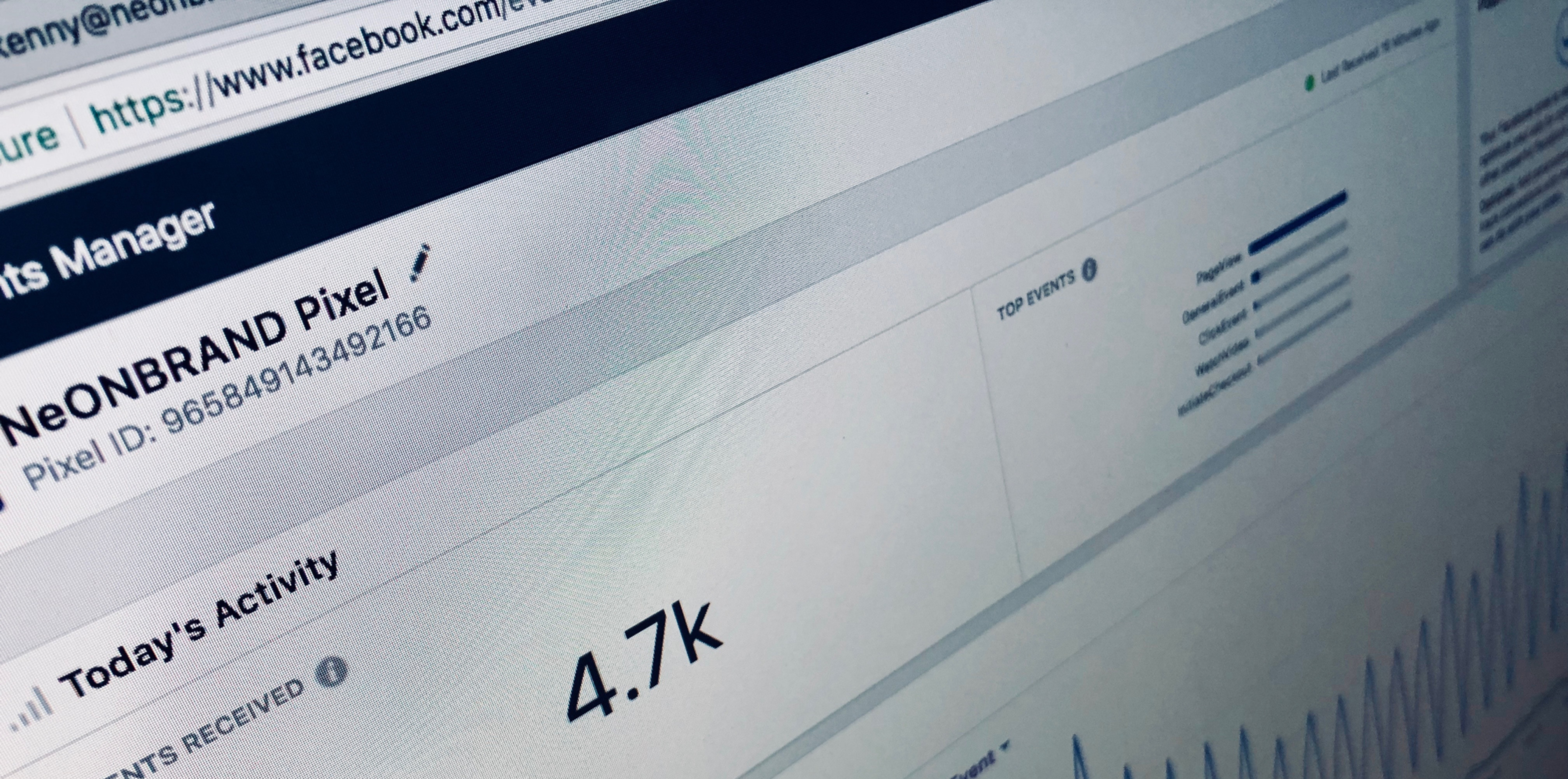
The Meta Pixel remains an important part of website advertising because it can help businesses measure actions, optimize campaigns and build audiences from website activity. Meta describes the Pixel as a piece of JavaScript code that enables measurement, optimization and audience creation.
However, installing the Pixel is not enough.
An SME should make sure its key conversion events are mapped correctly. Depending on the business, this could include a purchase, qualified lead, registration, booking, add-to-cart action or completed enquiry form.
The tracking setup should answer a simple question: when Meta delivers an ad, can the system accurately understand what happened after the click?
This is why advertisers should regularly check Events Manager, verify that important events are firing correctly and compare platform reporting with their own website, CRM or sales records.
For lead generation, this becomes particularly important. A campaign may report 100 leads, but if the sales team discovers that only 15 are genuinely qualified, optimizing only for lead quantity can push the campaign in the wrong direction.
The objective should therefore be to feed Meta signals that reflect real business value.
4. Use Lookalike Audiences to Find New Customers
Once an SME has accumulated meaningful first-party customer data, lookalike audiences can become another tool for prospecting.
Meta defines a lookalike audience as a way of reaching people who are similar to an existing audience or customer source.
Instead of building a new audience entirely from assumptions, an advertiser can create a source from people who have already completed valuable actions.
Possible sources include customers, purchasers, qualified leads, repeat buyers or high-value customers.
For example, an e-commerce company may begin with purchasers rather than all website visitors. A B2B company might use qualified leads instead of every form submission. A subscription business could use its most valuable customers as a source.
A smaller lookalike percentage traditionally represents a closer similarity to the source, while broader percentages increase potential reach. Rather than assuming that one percentage will always deliver the best ROI, test reach and efficiency against your actual customer acquisition targets.
This strategy also reinforces a broader principle: first-party data becomes more valuable when you use it to teach the advertising system what a good customer looks like.
Creative Quality Can Make or Break Meta Ads ROI
Targeting and tracking cannot compensate for weak creative.
People scroll quickly through Facebook and Instagram, so the first few seconds of a video, the opening line of a Reel or the visual clarity of a static ad can determine whether someone pays attention.
Current Meta advertising products also include creative automation features designed to optimize images and videos into versions that may be more suitable for audience engagement.
For SMEs, the answer is not to create one advertisement and leave it unchanged for months.
Build a testing system.
Test different hooks, offers, visuals, formats and messages. One video might focus on a customer problem, another on the product benefit and another on proof or demonstration. The goal is to identify which ideas consistently generate qualified actions.
Large-scale 2026 creative research also points toward the importance of ongoing testing volume: its dataset covered 578,750 creatives across 6,015 Meta advertiser accounts and found that only a small share of creatives accounted for disproportionately high spend. The dataset is directional rather than a guarantee for any individual account, but it reinforces the value of continuous creative testing.
A productive Meta Ads strategy therefore treats creative as an ongoing process rather than a one-time production task.
Optimize for Business Results, Not Vanity Metrics
A campaign can generate impressive numbers while producing poor commercial results.
Thousands of impressions do not necessarily mean thousands of customers. A low CPC is not useful if the traffic does not convert. And an inexpensive lead is not necessarily a good lead.
For that reason, SMEs should connect campaign reporting to business metrics.
An e-commerce business may track ROAS, contribution margin, average order value, repeat purchase rate and customer acquisition cost.
A service company may focus on qualified leads, booked appointments, sales opportunities, close rate and revenue per customer.
A B2B company may need to go further and measure pipeline contribution rather than stopping at form submissions.
This is where a professional Meta Ads Agency can add value beyond campaign setup. The role is not merely to create advertisements inside Ads Manager. It is to connect advertising data with the commercial reality of the business and identify where the funnel is losing money.
Avoid Constant Campaign Editing
One of the biggest threats to efficiency is the urge to change everything whenever results fluctuate.
Meta’s learning environment is designed to optimize delivery based on available signals. Significant edits can cause an ad set to re-enter learning, and Meta's guidance has advised advertisers to avoid unnecessary changes while the system is learning.
That does not mean an advertiser should ignore a broken campaign.
It means changes should have a reason.
If tracking is incorrect, fix it. If the landing page is broken, fix it. If an ad contains a wrong price, fix it. But avoid repeatedly changing the audience, budget, creative and optimization event simply because one day's ROAS looks disappointing.
Look at trends over an appropriate period and consider the full customer journey before making major decisions.
Improve the Landing Page Alongside Meta Ads
Sometimes the problem is not the advertisement.
A user can click a compelling Meta ad and still fail to convert because the landing page loads slowly, the offer is unclear, the product information is insufficient or the checkout process creates friction.
This is why improving Meta Ads ROI requires a full-funnel mindset.
Your advertisement creates the expectation. The landing page needs to fulfill it. The offer needs to make sense. The checkout or enquiry process needs to be simple. Follow-up needs to happen quickly.
If the ad generates strong traffic but the website does not convert, increasing the advertising budget simply increases the amount of traffic entering a weak funnel.
A good performance marketing strategy therefore evaluates both media efficiency and conversion efficiency.
When Should an SME Consider a Meta Ads Agency?
Managing Meta Ads internally can work when a business has the necessary time, creative resources, tracking setup and marketing expertise.
As campaigns become more complex, however, an external partner can help with strategy, testing, reporting, creative development, conversion tracking and scaling.
When comparing a Meta Ads Agency or looking for the best marketing company for your business, avoid choosing solely on promises of a particular ROAS. Ask how the agency measures profitability, how it handles creative testing, how it validates leads or purchases, how often campaigns are reviewed and how it connects advertising performance with broader business goals.
A strong agency relationship should make the decision-making process clearer, not more complicated.
A Practical Meta Ads ROI Framework for SMEs
A profitable Meta campaign generally develops through stages.
First, establish the offer, conversion goal and tracking infrastructure. Next, launch a controlled test and collect meaningful data. Then identify the creatives and audience signals that are producing the strongest business outcomes.
Once performance becomes more consistent, scale gradually while monitoring acquisition cost, revenue and conversion quality.
Finally, continue testing rather than treating the winning campaign as a permanent formula.
Meta’s automation can help with delivery and optimization, but it still needs useful signals and strong creative inputs. Meta itself positions Advantage+ as a suite designed to use AI and automation to optimize campaigns in real time.
Final Thoughts: Better Data Creates Better Meta Ads ROI
Getting the best ROI from Meta Ads is less about finding a secret targeting trick and more about creating a system that learns.
Start with a budget that allows you to test without taking unnecessary risk. Build campaigns around meaningful business outcomes. Use website and customer data responsibly. Give Meta enough conversion information to optimize. Use lookalikes and automation where they make sense. Test creative consistently, and scale only after results demonstrate that additional spend has a reasonable chance of producing additional value.
For SMEs, the most important mindset shift is to stop viewing every campaign as a one-time advertising exercise.
Meta Ads work best when they become an ongoing process of testing, measurement, learning and improvement.
FAQs About Meta Ads for SMEs
How much should an SME spend on Meta Ads?
There is no universal budget because costs depend on the industry, target market, conversion rate and customer acquisition cost. A focused test of around $10–$30 per day can be a practical starting point for some SMEs, but businesses should determine the budget based on the number and value of conversions they need.
How long should I run Meta Ads before judging performance?
Avoid making major decisions from only a day or two of data. New ad sets need time and sufficient optimization events for Meta's delivery system to learn. Meta has described the learning phase as a period of less stable delivery, with roughly 50 optimization events over a week traditionally used as a benchmark for exiting learning.
Is a high ROAS always a sign of a successful campaign?
No. ROAS needs to be considered alongside margins, customer acquisition costs, average order value and lifetime customer value. A campaign can report a high ROAS while generating insufficient profit.
Are Lookalike Audiences still useful?
Yes. Meta continues to provide lookalike audience capabilities for reaching people similar to existing customers or other source audiences. Their value depends on the quality of the source data and the business context.
Should SMEs use broad audiences or detailed targeting?
The answer depends on the account and objective. Meta's current Advantage+ products increasingly use automation to expand delivery and optimize toward results, so businesses should test audience structures rather than assuming that the narrowest possible targeting will always perform best.
What is more important: targeting or creative?
Both matter, but creative strongly influences whether people stop, engage and take the next step. SMEs should continuously test different hooks, messages, formats and offers instead of relying on one creative indefinitely.
Do I need the Meta Pixel?
For websites using Meta Ads, the Meta Pixel is an important measurement and optimization tool. It can help track website actions and build audiences for advertising. Accurate event configuration and regular tracking checks are essential.
When should I hire a Meta Ads Agency?
An SME may benefit from an agency when it lacks the internal resources to manage tracking, creative testing, campaign optimization, reporting and scaling. The right partner should be assessed on its process and ability to connect ad performance with actual business revenue rather than on a promised ROAS alone.


Comments